




The Science Stopping A Complete Brake Repair Services in Sharjah
In the heart of the UAE, Sharjah stands as a cultural beacon, a city where tradition meets modernity on roads that stretch from the historic Heart of Sharjah to the bustling industrial zones. Every...

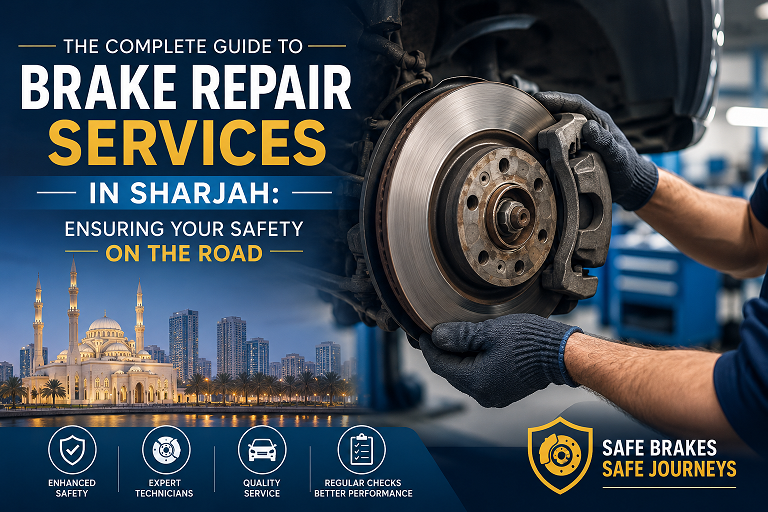
In the heart of the UAE, Sharjah stands as a cultural beacon, a city where tradition meets modernity on roads that stretch from the historic Heart of Sharjah to the bustling industrial zones. Every day, thousands of vehicles navigate these streets, carrying families, commuters, and commercial goods. Yet amid this constant motion, one system works silently and tirelessly to ensure every journey ends safely: your vehicle’s braking system. Understanding the intricacies of brake repair services in Sharjah is not just about maintaining a car; it is about safeguarding lives, protecting investments, and ensuring peace of mind on every drive.
Table Of Content
The Critical Nature of Brake Systems in the UAE Climate
The United Arab Emirates presents one of the most demanding environments for automotive components anywhere in the world. During summer months, temperatures routinely exceed 45 degrees Celsius, transforming vehicle components into heat-soaked metal and rubber. This extreme thermal environment has a profound impact on braking systems. When brake pads clamp onto rotors, friction generates enormous heat, sometimes exceeding 500 degrees Celsius. In cooler climates, this heat dissipates relatively quickly, but in Sharjah’s oppressive heat, the ambient temperature offers little relief, causing components to operate at the very edge of their design parameters.
Heat affects every aspect of brake performance. Brake fluid, the hydraulic lifeblood of the system, has a specific boiling point. When this fluid absorbs moisture from the humid air, its boiling point drops dramatically. In severe conditions, the fluid can actually boil within the brake lines, creating vapor pockets that compress instead of transmitting hydraulic pressure. This phenomenon, known as vapor lock, can leave drivers with a pedal that goes straight to the floor with no braking effect whatsoever. This is why professional brake system repair in Sharjah must always include brake fluid analysis and replacement at appropriate intervals.
Beyond heat, the unique driving patterns in Sharjah accelerate brake wear. The city’s layout combines high-speed highways connecting to Dubai and the Northern Emirates with dense urban traffic in areas like Al Majaz, Al Qasimia, and Al Khan. The constant acceleration and deceleration cycles, particularly during peak hours, subject brake pads to repetitive stress that wears them down far faster than highway cruising alone. Additionally, the fine desert dust that permeates the air acts as an abrasive, accelerating wear on both pads and rotors and potentially contaminating brake calipers.
Understanding the Components of Your Braking System
To truly appreciate the value of professional brake repair, it helps to understand what lies beneath your wheels. The modern braking system is an engineering marvel, combining mechanical precision with hydraulic efficiency. At its foundation are the brake pads, friction materials that press against the rotors to create stopping force. These pads come in various compositions, each with distinct characteristics. Organic pads offer quiet operation but wear quickly. Semi-metallic pads provide excellent stopping power and heat dissipation but can be noisy. Ceramic pads, increasingly recommended for UAE conditions, offer the ideal balance of durability, quiet operation, and consistent performance even under extreme heat.
The brake rotors, also called discs, are the metal surfaces that the pads clamp onto. They must be perfectly flat and true to provide smooth, vibration-free braking. Over time and through countless heating and cooling cycles, rotors can develop runout or become warped. This warpage manifests as a pulsation felt through the brake pedal or steering wheel during braking. In severe cases, rotors can develop cracks or hot spots that compromise structural integrity. Professional brake inspection services carefully measure rotor thickness and runout, determining whether resurfacing is possible or if replacement is necessary.
The brake calipers are the hydraulic clamps that squeeze the pads against the rotors. These components house pistons that extend when brake fluid pressure increases. Calipers can seize or stick, causing uneven pad wear, pulling during braking, and reduced fuel efficiency from constant drag. Modern vehicles increasingly feature electronic parking brakes integrated into the rear calipers, adding complexity that requires specialized diagnostic equipment for proper service.
Brake lines and hoses carry fluid from the master cylinder to each caliper. These rubber components deteriorate over time, especially in the harsh UAE environment where heat and ozone accelerate rubber degradation. Swollen or cracked brake hoses can restrict fluid flow, causing delayed braking response or uneven braking distribution.
The Warning Signs You Cannot Ignore
Your vehicle provides numerous clues when its braking system needs attention. Recognizing these signs early can prevent catastrophic failure and save substantial repair costs. A high-pitched squealing noise when braking is often the first warning, indicating that brake pads have worn down to their wear indicators. These metal tabs are designed to create audible warning before the friction material is completely exhausted. Continuing to drive with squealing brakes will soon lead to grinding noises, which signal that metal is now contacting metal. At this stage, the rotors are being damaged, and repair costs escalate dramatically.
Vibrations during braking, particularly at highway speeds, point toward warped rotors. This condition creates an uncomfortable and unsafe driving experience, as steering control can be compromised. The vibration frequency often changes with vehicle speed, becoming more pronounced at higher velocities. Similarly, a brake pedal that feels soft, spongy, or requires pumping indicates problems within the hydraulic system. Air trapped in the lines, contaminated brake fluid, or a failing master cylinder can all produce this symptom, each requiring professional diagnosis.
If your vehicle pulls consistently to one side during braking, uneven brake application is occurring. This could result from a stuck caliper, uneven pad wear, or a collapsed brake hose restricting fluid flow to one wheel. Beyond the immediate safety concerns, uneven braking accelerates wear on one side, leading to premature tire wear and alignment issues. The appearance of dashboard warning lights, including the brake system warning light or ABS light, indicates that the vehicle’s onboard diagnostics have detected a fault requiring immediate attention.
The Professional Brake Repair Process
When you entrust your vehicle to professional brake repair services in Sharjah, you should expect a comprehensive, methodical approach. The process begins with a thorough inspection that goes far beyond a visual check. A qualified technician will measure brake pad thickness, documenting wear patterns that can reveal issues like sticking calipers or misalignment. Rotor thickness is measured with precision micrometers, and runout is checked with dial indicators to ensure rotors are within factory specifications.
Brake fluid condition is analyzed using specialized testers that measure moisture content and boiling point. This analysis is particularly critical in the UAE, where humidity and heat accelerate fluid degradation. The brake system is pressure tested to identify any leaks in lines, hoses, or calipers that might compromise hydraulic integrity. The inspection also includes checking the parking brake mechanism, ensuring it holds the vehicle securely on inclines.
Following inspection, the technician develops a repair strategy tailored to your vehicle’s specific needs. This might involve brake pad replacement with premium ceramic or semi-metallic pads suited to UAE driving conditions. Rotor resurfacing, also called turning or machining, restores a smooth surface to rotors that are still within thickness specifications. This process uses specialized lathes that cut a micro-thin layer from the rotor surface, eliminating warpage and scoring. Rotors that are below minimum thickness or show cracks must be replaced entirely.
Caliper service involves cleaning and lubricating sliding pins, replacing dust boots, and in some cases, rebuilding or replacing seized calipers. The brake fluid is completely flushed and replaced with fresh fluid meeting the vehicle manufacturer’s specifications. This fluid flush is essential, as old fluid containing moisture and contaminants can compromise braking performance and damage expensive ABS components.
The Smart Garage Advantage
In the competitive landscape of automotive repair in Sharjah, certain service providers distinguish themselves through commitment to quality, transparency, and customer education. A modern service center approaches brake repair as a partnership with the vehicle owner, providing detailed explanations and visual evidence of conditions found during inspection. Digital vehicle health reports have revolutionized this interaction, allowing customers to see high-resolution images of worn brake pads and scored rotors alongside clear explanations of recommended repairs.
The use of advanced diagnostic equipment sets professional shops apart. Modern vehicles are increasingly computerized, with ABS modules, electronic brake force distribution, and stability control systems that interact with braking components. Proper diagnosis requires manufacturer-level diagnostic tools that can read fault codes, monitor sensor data, and perform system tests. Additionally, after brake repairs, many systems require electronic reset procedures that only specialized equipment can perform.
Parts quality significantly impacts brake system performance and longevity. A reputable service provider uses premium parts from established manufacturers, avoiding the false economy of cheap components that wear quickly and compromise safety. Brake pads formulated for the UAE market offer improved heat resistance and longer service life, providing better value despite higher initial cost. Similarly, quality rotors with proper metallurgy resist warping and provide consistent stopping performance.
Preventive Maintenance Strategies for Sharjah Drivers
The old adage about prevention being better than cure applies perfectly to brake systems. Implementing a proactive maintenance strategy can prevent unexpected failures and extend component life significantly. For Sharjah drivers, the recommended brake inspection interval is every six months or 10,000 kilometers, whichever comes first. This schedule accounts for the demanding conditions and provides early detection of developing issues.
Beyond scheduled inspections, drivers should develop awareness of their vehicle’s normal braking feel and performance. Any change from baseline should prompt investigation. Regular wheel cleaning helps prevent brake dust buildup that can corrode wheels and contribute to caliper sticking. When washing vehicles, paying attention to the wheel wells and brake components can reveal leaking fluid or damaged components early.
Driving habits dramatically influence brake life. Anticipating traffic flow and coasting to stops reduces brake application frequency and intensity. Avoiding aggressive braking and reducing excessive speed helps minimize heat generation, extending pad and rotor life. In heavy traffic, maintaining greater following distances reduces the need for frequent stop-and-go braking. These practices not only save money on brake repairs but also improve fuel economy and reduce overall vehicle wear.
Frequently Asked Questions
1. How often should I replace my brake pads in Sharjah?
Due to the extreme heat and traffic conditions in Sharjah, brake pads typically require replacement between 25,000 to 40,000 kilometers, which is significantly less than the 50,000 to 70,000 kilometers common in cooler climates. However, this varies based on driving style, vehicle weight, and pad quality. Regular inspections every six months help determine the optimal replacement schedule for your specific vehicle.
2. What causes brake rotors to warp in UAE conditions?
Brake rotor warpage in the UAE primarily results from the extreme temperature cycles the rotors undergo. Heavy braking generates intense heat, and the rotors rapidly cool when driving continues. This expansion and contraction can cause the metal to deform over time. Additionally, parking with hot brakes while washing the vehicle can cause thermal shock that instantly warps rotors.
3. Why is brake fluid flush important in Sharjah?
Brake fluid is hygroscopic, meaning it absorbs moisture from the air. In Sharjah’s humid environment, this absorption happens faster than in dry climates. Moisture contaminated fluid has a lower boiling point, which can cause vapor lock during heavy braking. A fluid flush every two years or 40,000 kilometers maintains proper boiling point and protects expensive ABS components from internal corrosion.
4. Can I replace brake pads without replacing rotors?
It is possible to replace only the pads, but this is not recommended if the rotors show any wear, scoring, or warpage. New pads need a smooth, true surface to bed in properly. Installing new pads on worn rotors leads to reduced braking performance, noise, and premature pad wear. Professional assessment determines if rotors can be resurfaced or require replacement.
5. What should I do if my brake warning light comes on?
The brake warning light on your dashboard should never be ignored. It can indicate low brake fluid level, worn brake pads, a hydraulic leak, or an ABS system fault. Safely pull over and check the brake fluid reservoir level. If low, this suggests pad wear or a leak. In either case, the vehicle should be driven immediately to a qualified service center for professional diagnosis and repair. Continued driving with an illuminated warning light risks complete brake failure.







No Comment! Be the first one.