




Importing from China to USA Without Costly Mistakes
Introduction For thousands of businesses, importing from China to USA has become one of the most effective ways to reduce manufacturing costs, expand product offerings, and remain competitive....

Introduction
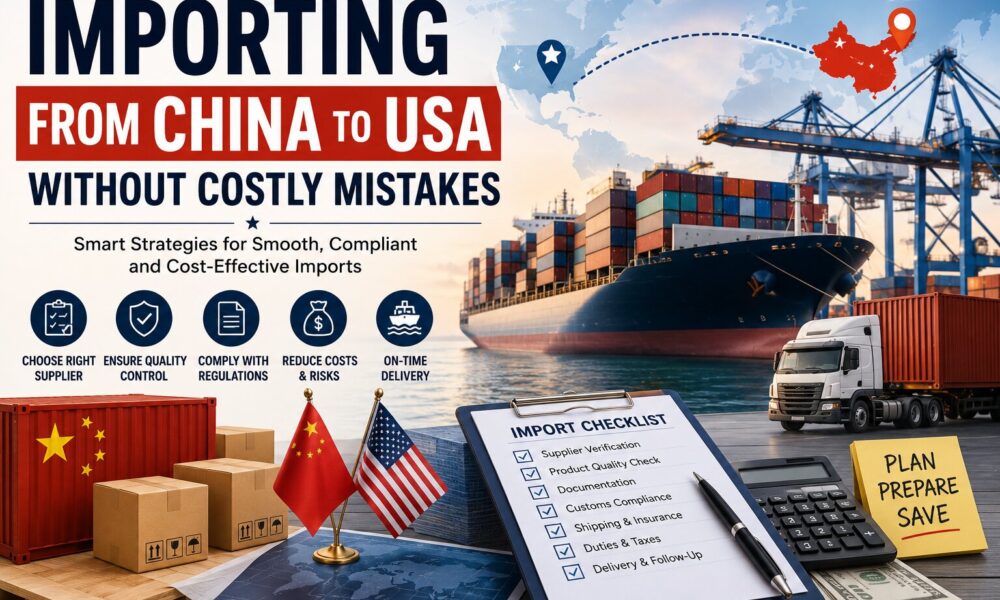
For thousands of businesses, importing from China to USA has become one of the most effective ways to reduce manufacturing costs, expand product offerings, and remain competitive. Chinese manufacturers produce everything from electronics and machinery to clothing, furniture, and consumer goods, giving American importers access to a wide range of products at competitive prices.
Table Of Content
- Introduction
- Why Businesses Import Products from China
- Common Mistakes Importers Make
- Choosing Suppliers Based Only on Price
- Failing to Verify Product Quality
- Underestimating Total Import Costs
- Understanding Import Documentation
- Know Your Product Classification
- Understand U.S. Import Regulations
- Choose the Right Shipping Method
- Ocean Freight
- Air Freight
- Plan for Customs Clearance
- Reduce Supply Chain Risks
- Lessons from Importing from Canada to USA
- Build Strong Supplier Relationships
- Technology Makes Importing Easier
- Best Practices for Successful Importing
- Conclusion
- Frequently Asked Questions
- What is the biggest mistake when importing from China to USA?
- What documents are needed for importing from China to USA?
- Is importing from Canada to USA easier than importing from China?
- How can businesses reduce import costs?
- How long does importing from China to USA usually take?
However, importing is far more complicated than placing an order and waiting for a shipment to arrive. Every import transaction involves supplier verification, product quality checks, customs regulations, shipping methods, tariffs, import documentation, and compliance with U.S. laws. Missing even one step can lead to delays, unexpected expenses, or rejected shipments.
While many businesses focus primarily on importing from China to USA, others also diversify their supply chains by importing from Canada to USA, especially when they require faster delivery times or products manufactured within North America.
This guide explains how businesses can avoid common importing mistakes, reduce unnecessary costs, and build a smoother international purchasing process.
Why Businesses Import Products from China
China remains one of the world’s largest manufacturing hubs because it offers an extensive supplier network, large-scale production capacity, and competitive pricing.
Businesses choose importing from China to USA for several reasons:
- Lower manufacturing costs
- Large supplier selection
- High production capacity
- Wide variety of products
- Flexible order quantities
- Established export infrastructure
For many businesses, importing from China creates opportunities to improve profit margins while expanding product lines.
Common Mistakes Importers Make
Many problems occur before a shipment even leaves the supplier.
Understanding these mistakes helps businesses prepare more effectively.
Choosing Suppliers Based Only on Price
The cheapest supplier is not always the best choice.
Low pricing may indicate lower-quality materials, inconsistent production standards, or communication challenges.
Businesses should evaluate suppliers based on:
- Manufacturing experience
- Product quality
- Customer reviews
- Certifications
- Communication
- Production capacity
Reliable suppliers often provide greater long-term value than simply offering the lowest price.
Failing to Verify Product Quality
Product inspections should never be overlooked.
Receiving an entire shipment of defective products can erase potential profits and damage customer trust.
Quality inspections before shipment help identify issues before products leave the factory.
Underestimating Total Import Costs
Many first-time importers focus only on product pricing.
Actual importing costs often include:
- Ocean or air freight
- Customs duties
- Port handling fees
- Insurance
- Customs brokerage
- Warehousing
- Inland transportation
Calculating total landed cost before purchasing helps businesses set realistic pricing and protect profit margins.
Understanding Import Documentation
Proper documentation keeps shipments moving through customs efficiently.
Typical import documents include:
- Commercial invoice
- Packing list
- Bill of lading
- Arrival notice
- Customs entry documents
- Certificates when required
Every document should contain consistent information regarding product descriptions, quantities, values, and shipment details.
Accurate paperwork reduces customs delays and unnecessary inspections.
Know Your Product Classification
Every imported product receives a tariff classification.
Classification determines:
- Applicable duties
- Import restrictions
- Regulatory requirements
- Customs reporting
Incorrect classifications may result in additional costs or customs penalties.
Businesses should verify classifications before importing products regularly.
Understand U.S. Import Regulations
Different products follow different regulations.
Depending on the product, businesses may need to comply with rules involving:
- Product safety
- Food requirements
- Medical regulations
- Electronic standards
- Labeling requirements
- Environmental compliance
Researching applicable regulations before placing orders prevents costly surprises after shipments arrive.
Choose the Right Shipping Method
Shipping affects both delivery time and overall cost.
Ocean Freight
Best for:
- Large shipments
- Lower transportation costs
- Flexible delivery schedules
Air Freight
Best for:
- Urgent inventory
- High-value products
- Smaller shipments
Selecting the appropriate shipping option depends on product value, delivery deadlines, and inventory planning.
Plan for Customs Clearance
Customs clearance is one of the most important stages of importing.
Shipments may experience delays because of:
- Missing documentation
- Incorrect values
- Classification errors
- Product inspections
- Regulatory concerns
Preparing documentation before goods arrive significantly improves clearance efficiency.
Reduce Supply Chain Risks
International trade always involves uncertainty.
Businesses should prepare for:
- Port congestion
- Weather disruptions
- Production delays
- Shipping schedule changes
- Supplier issues
Diversifying suppliers and maintaining reasonable inventory levels helps reduce operational risk.
Lessons from Importing from Canada to USA
Although importing from Canada to USA usually involves shorter transportation distances and different trade considerations, many best practices remain the same.
Successful importers still prioritize:
- Accurate documentation
- Supplier verification
- Compliance with U.S. regulations
- Proper product classification
- Inventory planning
Businesses sourcing from multiple countries often apply consistent import procedures regardless of supplier location.
Build Strong Supplier Relationships
Long-term supplier relationships often produce better business results.
Reliable communication helps businesses:
- Resolve problems quickly
- Improve product quality
- Negotiate production schedules
- Maintain consistent inventory
Working collaboratively with suppliers encourages stronger partnerships over time.
Technology Makes Importing Easier
Modern software allows businesses to manage international trade more efficiently.
Many companies now use digital tools for:
- Shipment tracking
- Inventory management
- Purchase orders
- Customs documentation
- Supplier communication
Technology improves visibility while reducing manual errors throughout the importing process.
Best Practices for Successful Importing
Businesses that consistently succeed at importing from China to USA usually follow a structured process.
Key best practices include:
- Research suppliers carefully.
- Verify product quality before shipment.
- Calculate total landed costs.
- Prepare complete documentation.
- Understand import regulations.
- Classify products correctly.
- Plan shipping schedules early.
- Monitor inventory levels.
- Maintain organized records.
- Review supply chain performance regularly.
Following these practices helps reduce delays while improving operational efficiency.
Conclusion
Successful importing from China to USA requires more than finding affordable products. Businesses must understand customs procedures, prepare accurate documentation, verify suppliers, calculate total costs, and comply with applicable regulations.
Companies that approach importing strategically are better positioned to avoid unnecessary expenses, shipment delays, and compliance problems. Strong supplier relationships, careful planning, and efficient logistics all contribute to smoother operations and long-term growth.
Businesses that also engage in importing from Canada to USA can apply many of the same principles, creating consistent import procedures regardless of where products originate.
International sourcing offers tremendous opportunities, but lasting success comes from preparation, informed decision-making, and continuous improvement rather than simply focusing on the lowest purchase price.
Frequently Asked Questions
What is the biggest mistake when importing from China to USA?
The most common mistake is failing to research suppliers and prepare accurate customs documentation before shipping products.
What documents are needed for importing from China to USA?
Typical documents include a commercial invoice, packing list, bill of lading, customs entry paperwork, and any product-specific certificates required by U.S. regulations.
Is importing from Canada to USA easier than importing from China?
In many cases, importing from Canada to USA involves shorter transit times and different trade considerations, but businesses must still meet U.S. customs and compliance requirements.
How can businesses reduce import costs?
Businesses can reduce costs by selecting reliable suppliers, planning shipments early, calculating landed costs accurately, and avoiding customs delays caused by documentation errors.
How long does importing from China to USA usually take?
Transit times vary based on shipping method, customs processing, supplier production schedules, and destination, but ocean freight generally takes significantly longer than air freight.






No Comment! Be the first one.